

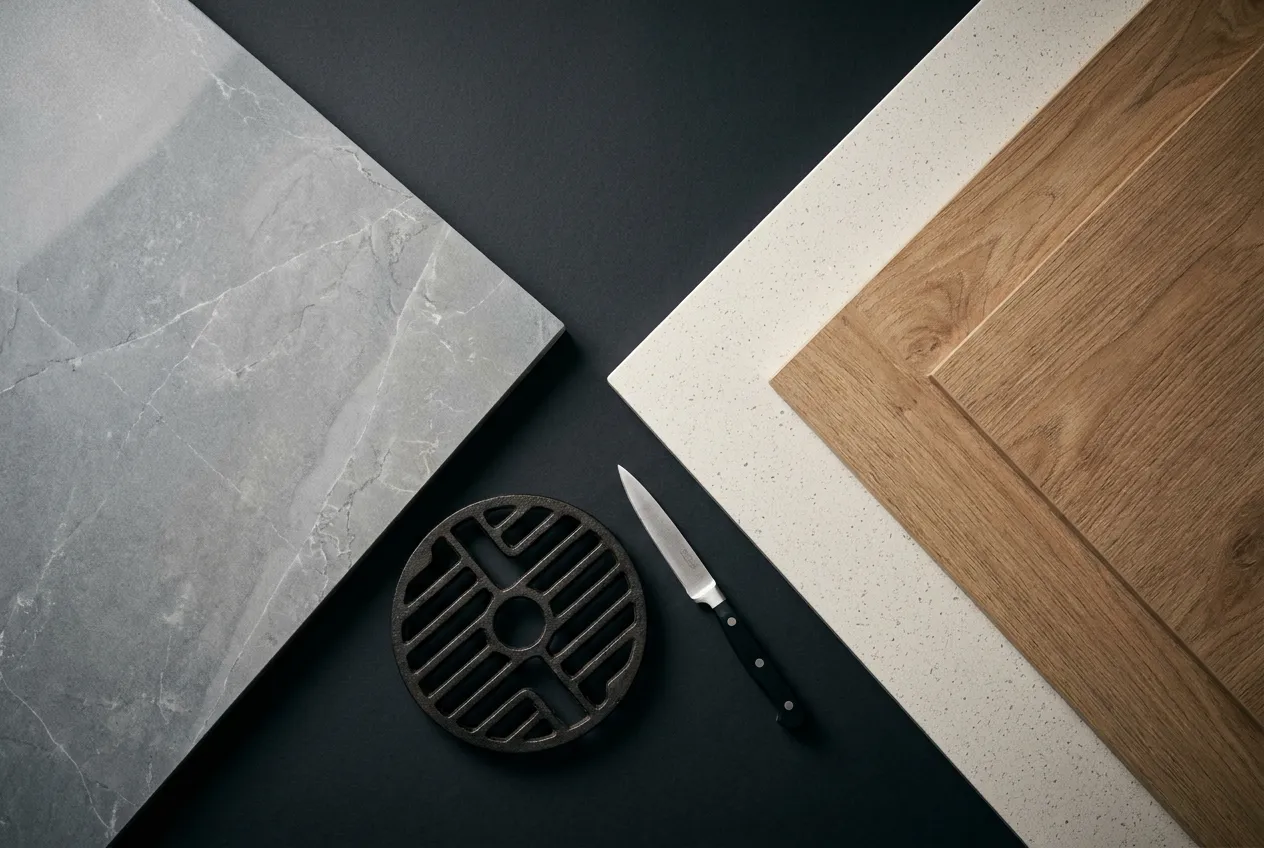
Choosing your kitchen benchtop material ranks among the most consequential decisions in any renovation. Unlike cabinet colours or hardware finishes—relatively easy to update later—benchtops represent a significant investment you’ll live with daily for a decade or more. Get it right, and you’ll barely think about it beyond appreciating its beauty and performance. Get it wrong, and you’ll notice every scratch, stain, or heat mark for years to come.
Our 2026 kitchen trends guide flagged porcelain’s rise to become New Zealand’s most preferred benchtop material, overtaking engineered stone. But “most popular” doesn’t automatically mean “right for you.” At Chatswood Kitchens, we’ve installed thousands of benchtops across every material available, and each genuinely suits different households, budgets, and priorities.
This guide provides an honest, practical comparison of the three materials Kapiti Coast homeowners choose most often: porcelain, engineered stone, and laminate. Rather than declaring one universally superior, we’ll help you understand which material genuinely suits your specific kitchen, cooking habits, and budget.
Key Takeaways
- Porcelain offers the best all-round performance for busy family kitchens, combining exceptional heat, scratch, and stain resistance with contemporary aesthetics
- Engineered stone remains a strong mid-to-premium choice, offering extensive colour options though requiring more care around heat exposure than porcelain
- Laminate delivers the most budget-friendly option, with modern ranges convincingly replicating stone and timber at a fraction of the cost
- Coastal properties benefit significantly from porcelain’s superior moisture and salt-air resistance, an important consideration throughout Kapiti Coast
- Heat resistance varies dramatically between materials, with porcelain allowing direct hot pan contact whilst engineered stone and laminate both require trivets
- Cost differences are substantial: laminate typically costs $150-$400/m² installed, engineered stone $500-$900/m², and porcelain $600-$1,000/m²
- Lifespan expectations differ meaningfully, with porcelain and quality engineered stone lasting 20-25+ years compared to laminate’s typical 10-15 year lifespan
- Your final choice should balance budget, lifestyle, and kitchen usage patterns rather than simply following current trend popularity
Why Benchtop Material Matters So Much
Your benchtop endures more daily wear than almost any other kitchen surface. Hot pans, sharp knives, acidic ingredients, dropped items, and constant cleaning all take their toll over years of use. Unlike a wall you might repaint or a light fixture you might swap, benchtop replacement typically means a genuinely disruptive, expensive undertaking.
Beyond durability, your benchtop also anchors your kitchen’s overall aesthetic. As one of the largest continuous surfaces in the room, its colour, pattern, and finish significantly influence how the entire space feels—warm or cool, contemporary or traditional, dramatic or understated.
Understanding each material’s genuine strengths and limitations, rather than relying purely on showroom appeal, ensures your choice performs beautifully for years rather than becoming a source of ongoing frustration.
Porcelain Benchtops: The Contemporary Favourite
Porcelain has moved from a niche premium option to New Zealand’s most recommended benchtop material, and understanding why helps clarify whether it suits your kitchen.
What It Is
Porcelain benchtops are manufactured from natural clays fired at extremely high temperatures, creating an exceptionally dense, hard surface. Modern manufacturing techniques produce large-format slabs in an extensive range of colours and patterns, including highly convincing replications of marble, concrete, and natural stone.
Genuine Advantages
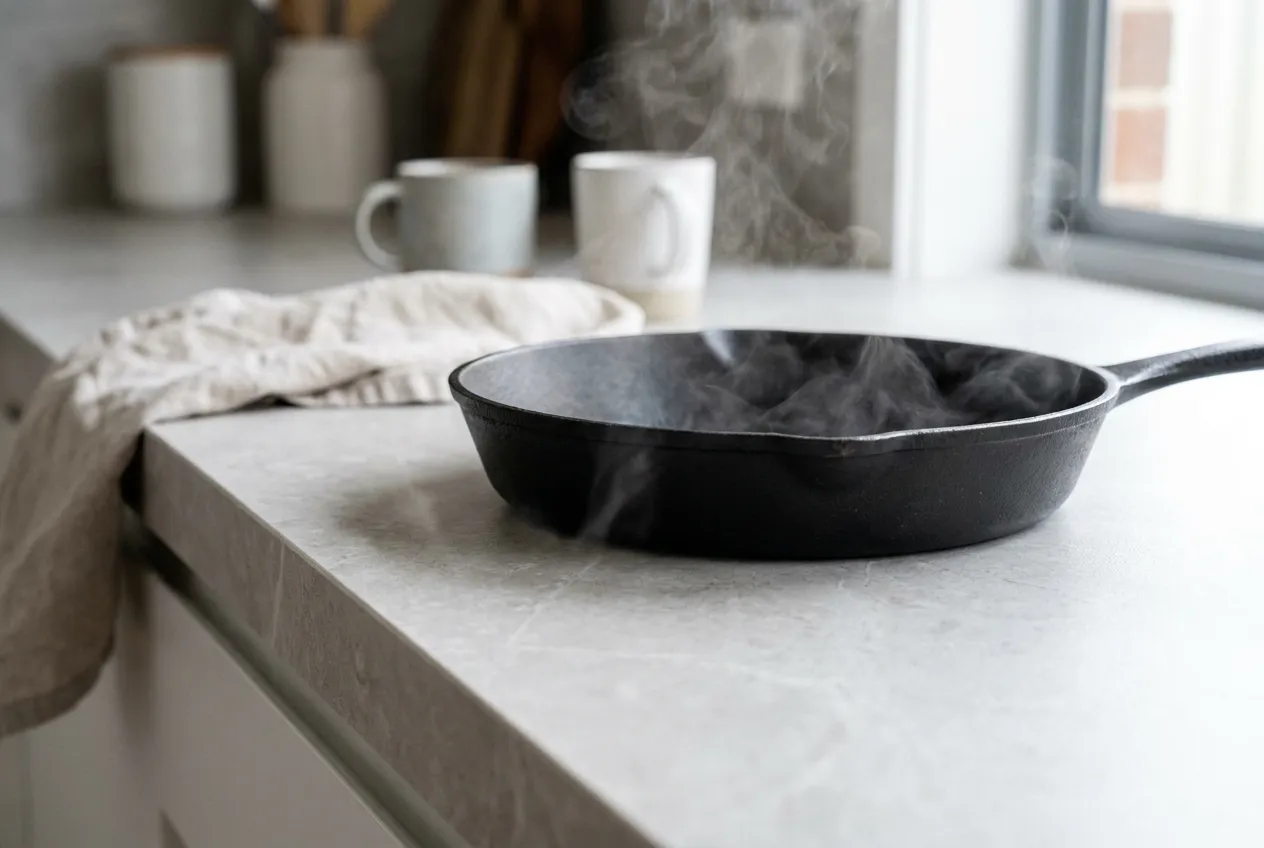
Porcelain’s standout strength is heat resistance—you can place hot pans directly from the stovetop onto the surface without damage, a genuine practical advantage for busy family cooking. Scratch resistance similarly exceeds most alternatives, standing up well to daily knife contact and general kitchen activity.
The material resists staining exceptionally well, including from red wine, turmeric, coffee, and other notoriously stubborn culprits. Its non-porous surface means no sealing is ever required, unlike natural stone. UV stability means porcelain won’t fade or yellow over time, even in kitchens receiving significant natural light—relevant for many north-facing Kapiti Coast homes.
Large-format slabs (often up to 3 metres in a single piece) minimise visible seams, creating clean, continuous surfaces even across substantial island benchtops.
Genuine Limitations
Professional installation is essential—porcelain’s hardness means it can crack if mishandled during fabrication or installation, requiring specialist tools and genuine expertise. Edge profile options are somewhat more limited than natural or engineered stone, typically offering clean, straight, or gently bevelled edges rather than elaborate decorative profiles.
Porcelain commands a higher price point than laminate and sits at the upper end of, or slightly above, engineered stone pricing.
Cost and Best Use
Expect $600-$1,000+ per square metre installed, varying by pattern complexity and slab thickness. Porcelain particularly suits busy family kitchens where daily durability matters most, coastal properties benefiting from superior moisture resistance, and anyone wanting a genuinely low-maintenance, long-term surface.
Engineered Stone Benchtops: The Established Choice
Engineered stone (sometimes called quartz composite) has served as New Zealand’s dominant premium benchtop choice for over a decade, and remains an excellent option for many kitchens.
What It Is
Engineered stone combines crushed natural quartz (typically 90-95%) with polymer resins, creating a dense, non-porous material manufactured in slab form. This engineering process allows extensive colour and pattern consistency impossible with natural stone, which varies piece to piece.
Genuine Advantages
Engineered stone offers an extensive, consistent colour and pattern range, from clean whites through dramatic dark tones and convincing marble-look veining. Its non-porous composition means no sealing is required, unlike natural granite or marble, whilst still delivering genuine stone weight and solidity.
The material resists staining well under normal use and provides good overall durability for typical family kitchen activity.
Genuine Limitations
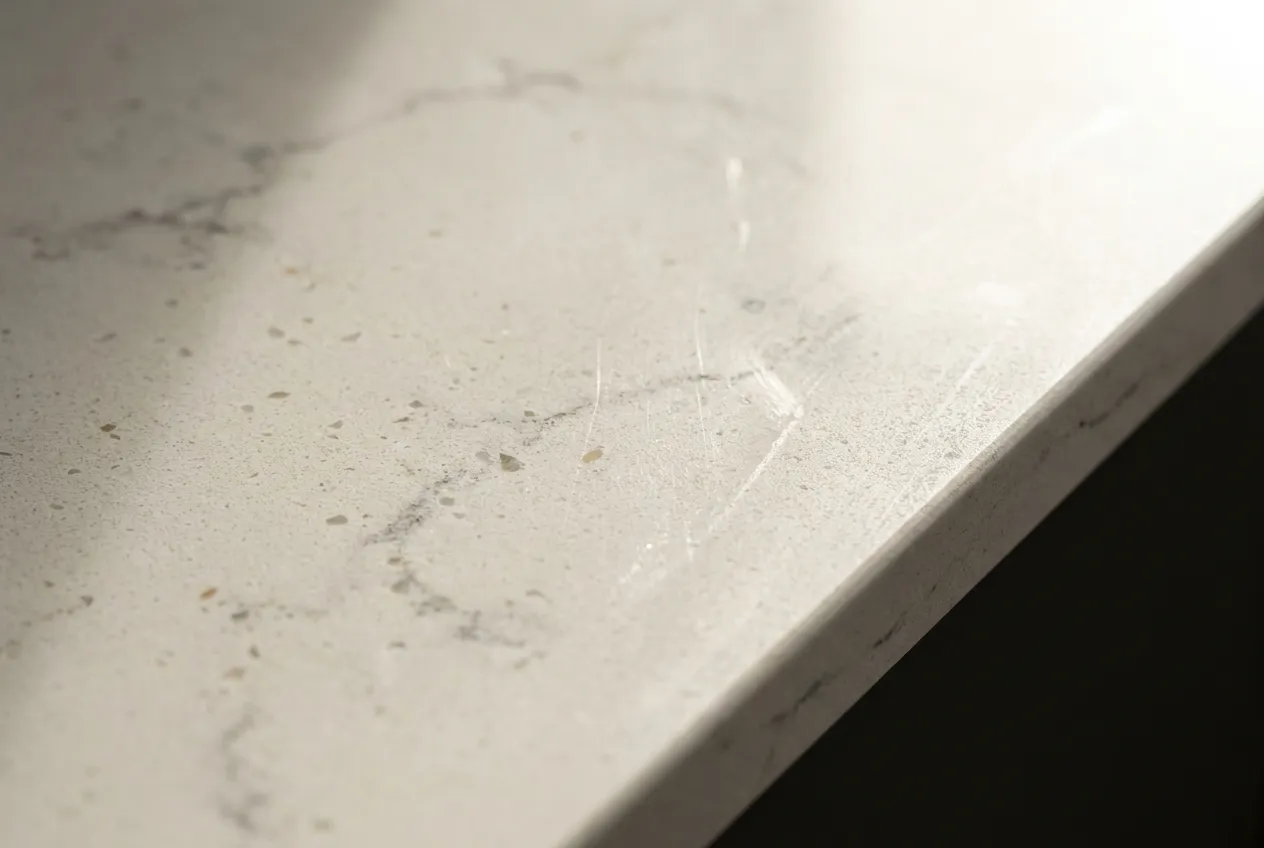
Heat resistance proves notably weaker than porcelain—direct contact with hot pans risks thermal shock, cracking, or discolouration, meaning trivets are genuinely necessary rather than optional. Edges can chip if struck with significant force, and repairs, whilst possible, rarely disappear completely.
It’s worth noting that engineered stone fabrication has faced increased industry scrutiny in recent years regarding fabricator safety during cutting and polishing processes, given fine silica dust exposure risks. Reputable New Zealand fabricators follow appropriate safety protocols, though this is worth being aware of when discussing your project with suppliers.
Cost and Best Use
Expect $500-$900 per square metre installed, varying by brand, colour, and slab thickness. Engineered stone suits homeowners wanting genuine stone aesthetics and weight with easier maintenance than natural stone, particularly where budget sits between laminate and premium porcelain.
Laminate Benchtops: The Budget-Smart Choice
Laminate remains New Zealand’s most accessible benchtop material, and modern manufacturing has dramatically improved what’s achievable within this budget-friendly category.
What It Is
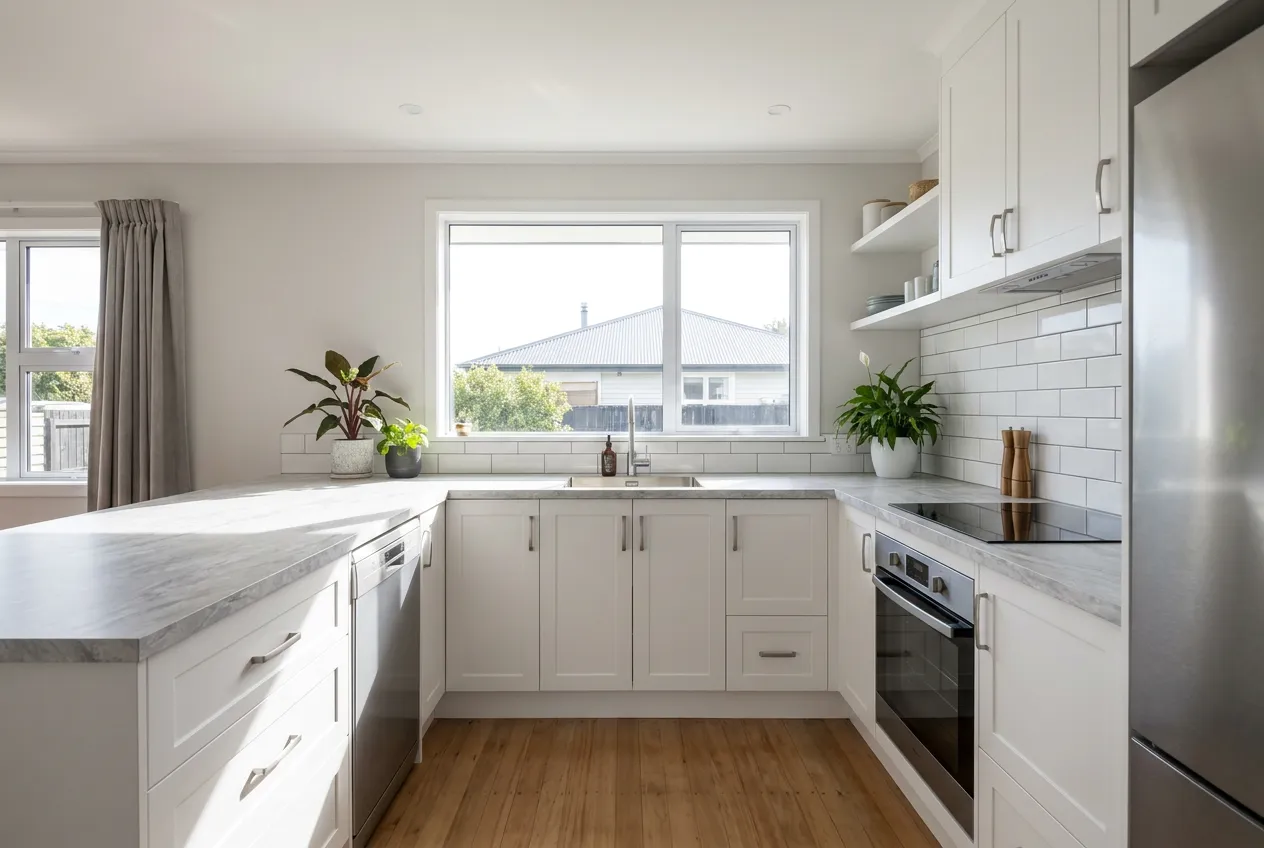
Laminate benchtops consist of a decorative paper layer bonded under high pressure to a particleboard or MDF core, finished with a protective surface layer. Contemporary laminates offer remarkably convincing stone, concrete, and timber-look finishes alongside solid colours and patterns.
Genuine Advantages
Cost represents laminate’s clearest advantage, delivering dramatically more affordable benchtops than either stone alternative whilst still achieving attractive, contemporary aesthetics. The material is lightweight, simplifying installation and reducing structural requirements compared to heavier stone options.
Modern laminate ranges offer genuinely extensive design flexibility, with new textures (including realistic timber grain and stone texture finishes) closing much of the visual gap with premium materials at a fraction of the cost.
Genuine Limitations
Heat resistance remains laminate’s most significant weakness—direct contact with hot cookware can scorch or bubble the surface permanently, making trivets essential rather than optional. Scratch and impact resistance also falls short of both stone alternatives, with sharp knives and heavy impacts capable of causing visible, permanent damage.
Seams are more visible than with large-format porcelain or stone slabs, and moisture exposure at seams or edges over time can eventually cause swelling if not properly maintained. Overall lifespan (typically 10-15 years with good care) proves shorter than either stone alternative.
Cost and Best Use
Expect $150-$400 per square metre installed, making laminate dramatically more accessible than stone alternatives. This material particularly suits budget-conscious renovations, rental properties, holiday homes with lighter use patterns, and homeowners planning a staged renovation approach where benchtop replacement might occur again within 10-15 years.
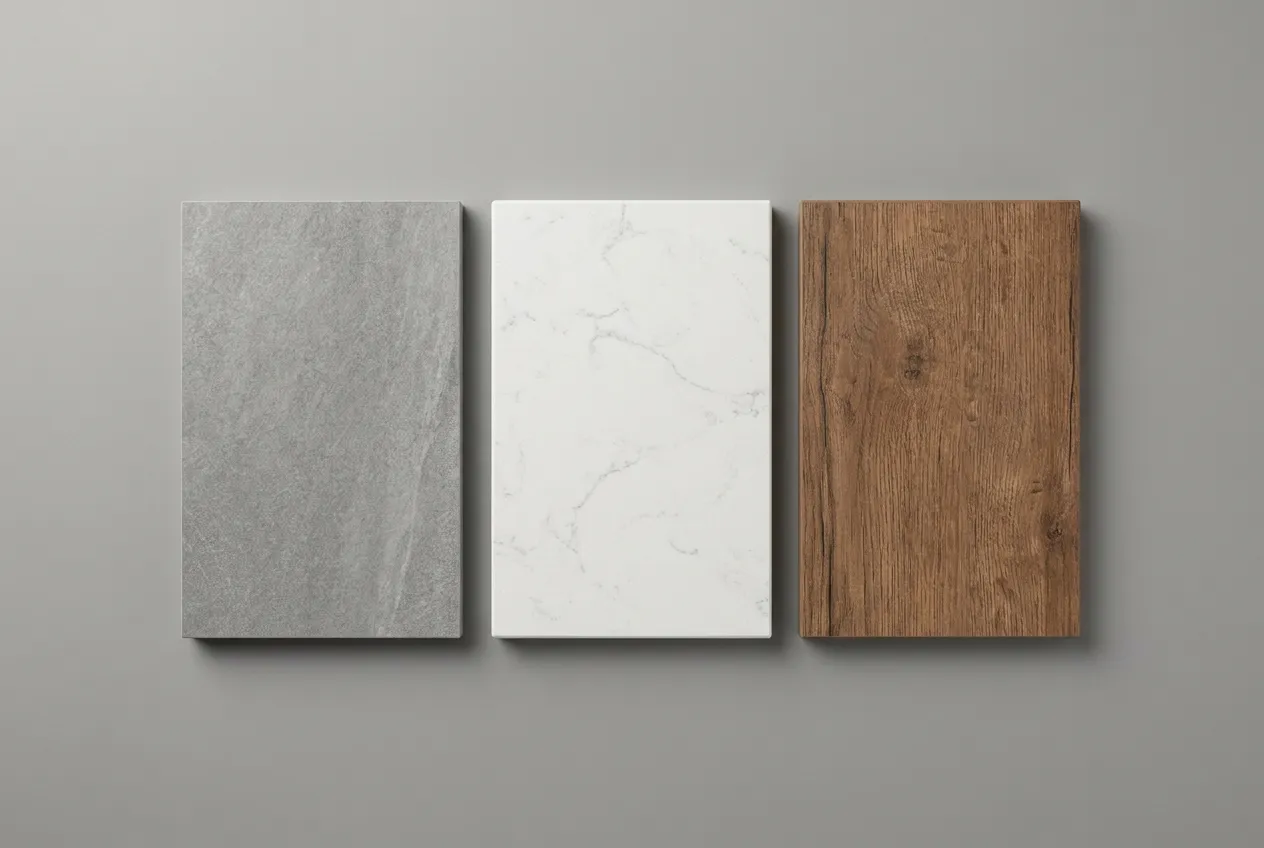
Head-to-Head Comparison
| Factor | Porcelain | Engineered Stone | Laminate |
|---|---|---|---|
| Heat resistance | Excellent (direct contact safe) | Moderate (trivets required) | Poor (trivets essential) |
| Scratch resistance | Excellent | Good | Fair |
| Stain resistance | Excellent | Good | Good (when sealed properly) |
| Sealing required | Never | Never | N/A (surface layer) |
| Typical lifespan | 20-25+ years | 20-25 years | 10-15 years |
| Cost per m² installed | $600-$1,000+ | $500-$900 | $150-$400 |
| UV/fade resistance | Excellent | Good | Fair (some fading over time) |
| Coastal suitability | Excellent | Good | Fair (edge sealing critical) |
| Seam visibility | Minimal (large format) | Minimal-moderate | Moderate |
| DIY-friendly | No (professional only) | No (professional only) | Limited DIY possible |
Coastal Considerations for Kapiti Coast Homes
Properties throughout Waikanae Beach, Raumati, Paraparaumu, and the wider Kapiti Coast face specific environmental factors worth considering carefully when selecting benchtop material.
Salt Air and Humidity
Coastal humidity and salt-laden air can accelerate wear on materials with any porosity or moisture sensitivity. Porcelain’s completely non-porous, dense composition handles these conditions exceptionally well, showing no vulnerability to salt air exposure over time.
Engineered stone similarly performs well given its non-porous composition, though ensure your fabricator uses marine-appropriate adhesives and sealants at joins and edges.
Laminate requires the most attention in coastal settings—ensure edges are properly sealed during installation, as moisture penetration at seams or the underside can eventually cause swelling or delamination in consistently humid coastal environments. Quality installation with appropriate edge treatment substantially mitigates this risk.
UV Exposure
Many Kapiti Coast kitchens enjoy generous natural light and coastal views, meaning benchtops often receive more direct sunlight than typical inland properties. Porcelain’s excellent UV stability means no fading concerns even with extensive sun exposure. Engineered stone generally performs well too, though extremely prolonged direct UV exposure can occasionally affect resin components over very long timeframes. Laminate shows the most vulnerability to gradual fading with heavy, sustained sun exposure.
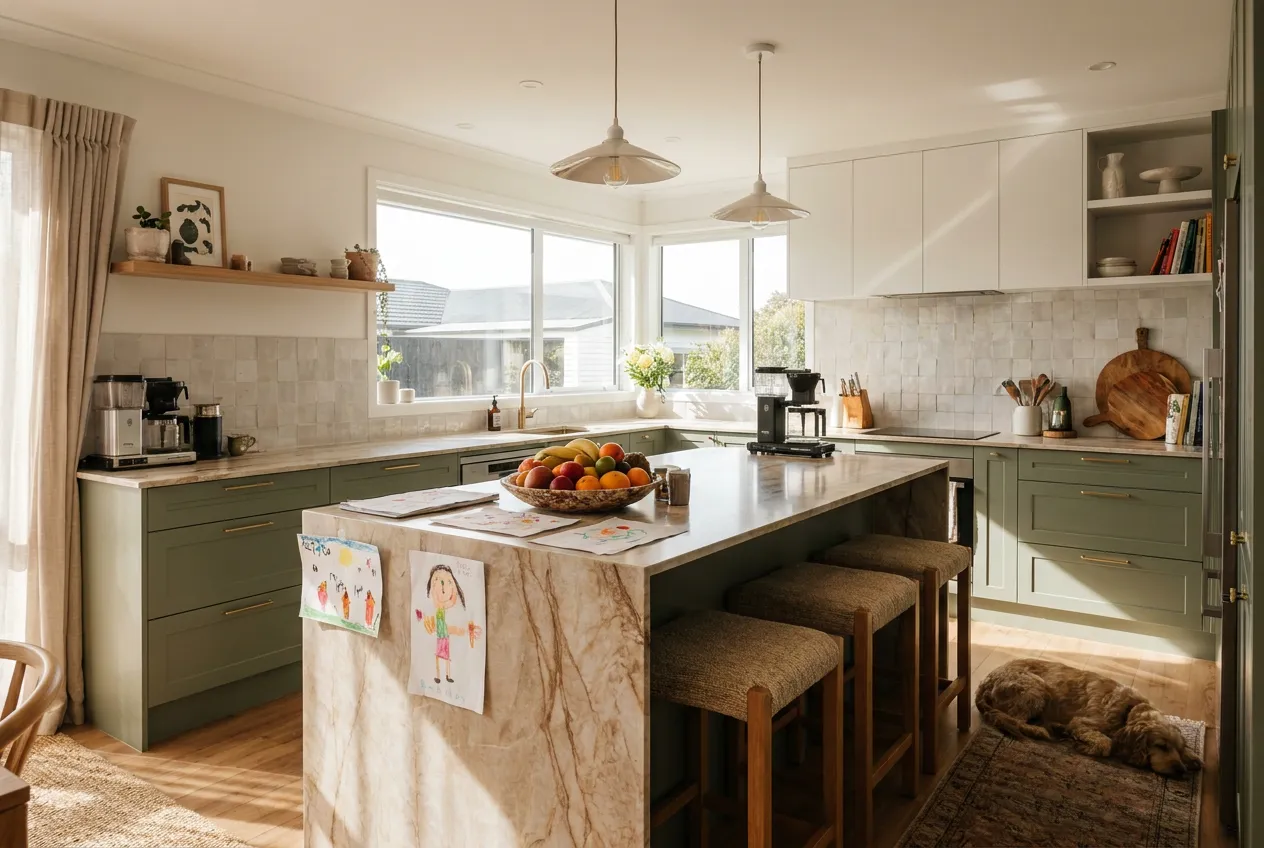
Real Kapiti Coast Examples
Example 1: Paraparaumu Family Home — Porcelain
A busy family of five chose porcelain for their kitchen renovation specifically for its heat resistance and durability. With teenagers regularly cooking and minimal patience for “precious” surfaces requiring careful treatment, porcelain’s genuine everyday toughness proved ideal. Two years on, the family reports zero visible wear despite heavy daily use, including regular direct contact with hot pans.
Example 2: Waikanae Beach Cottage — Engineered Stone
This coastal cottage renovation selected engineered stone in a soft, warm white with subtle veining, balancing budget considerations against wanting genuine stone aesthetics for their beachfront property. The homeowners appreciate the material’s low-maintenance, non-porous performance, whilst remaining mindful of using trivets for hot cookware as advised during installation.
Example 3: Raumati South Renovation — Laminate
A young family renovating on a tighter budget chose a stone-look laminate for their first-stage kitchen update, planning to potentially upgrade to porcelain during a future comprehensive renovation. The laminate’s contemporary stone-look pattern delivers attractive results immediately, allowing budget to prioritise cabinetry and appliances whilst keeping the benchtop cost-effective for now.
How to Choose: A Practical Decision Framework
Rather than choosing based purely on trend popularity, work through these practical considerations in sequence.
Start with Budget Reality
Confirm your genuine available budget for benchtops specifically, understanding this significantly affects which materials remain realistically accessible. If budget constraints are firm, laminate may be your practical starting point, with potential future upgrade once finances allow.
Consider Your Actual Cooking Habits
Honestly assess how your household actually uses the kitchen. Frequent, serious cooking with hot pans moving regularly from stovetop to benchtop favours porcelain’s heat resistance. Lighter use patterns might make engineered stone’s moderate heat sensitivity perfectly manageable with simple trivet habits.
Factor In Your Property’s Environment
Coastal properties, north-facing kitchens with heavy sun exposure, or particularly humid locations benefit most from porcelain’s superior environmental resistance. Less exposed inland properties have more flexibility across all three materials.
Think About Timeline
If you’re planning your genuinely long-term “forever kitchen,” investing in porcelain or quality engineered stone makes sense given their 20-25+ year lifespans. If this represents a staged renovation or shorter-term property plan, laminate’s lower upfront cost may represent better value for your specific circumstances.
For comprehensive budget guidance across your entire renovation, explore our Kitchen Renovation Kapiti Coast Planning & Budget Guide 2026. If you’re working with a genuinely tight budget, our guide to renovating for $10,000 explores how laminate benchtops fit within budget-conscious strategic renovations.
Conclusion
There’s no single “best” benchtop material for every Kapiti Coast kitchen—only the material best suited to your specific budget, lifestyle, and property. Porcelain offers genuinely superior performance for busy, heavy-use kitchens and coastal properties, justifying its premium price for many households. Engineered stone remains an excellent mid-to-premium choice, delivering genuine stone aesthetics with manageable care requirements. Laminate provides real, legitimate value for budget-conscious renovations, particularly where a future upgrade remains part of your longer-term plan.
Rather than choosing based purely on current trend popularity, we encourage working through the practical factors outlined here: your genuine budget, your household’s actual cooking and cleaning habits, your property’s specific environmental exposure, and your renovation timeline. This honest assessment consistently produces more satisfying long-term outcomes than simply selecting whatever’s currently most fashionable.
At Chatswood Kitchens, we’ve fabricated and installed all three materials extensively across Kapiti Coast homes for over four decades. We’re genuinely happy to discuss which material suits your specific circumstances rather than defaulting to whichever carries the highest margin—your long-term satisfaction matters more to us than any single sale.
Frequently Asked Questions
Which kitchen benchtop material lasts the longest?
Porcelain and quality engineered stone both typically last 20-25 years or longer with normal care, significantly outperforming laminate’s typical 10-15 year lifespan. Porcelain often edges ahead due to its superior scratch and heat resistance, meaning it accumulates less visible wear over decades of daily use compared to engineered stone, which can show minor chipping at edges or heat-related marks over very long timeframes if trivets aren’t used consistently. Laminate’s shorter lifespan stems from its more vulnerable surface layer, which can scorch, scratch, and eventually show seam-related wear sooner than either stone alternative. For a genuinely long-term “forever kitchen” benchtop, porcelain represents the most durable choice, though quality engineered stone remains an excellent long-lasting option at a typically lower price point.
Is porcelain worth the extra cost compared to laminate?
This depends on your specific priorities and budget. Porcelain typically costs $600-$1,000+ per square metre installed compared to laminate’s $150-$400 range—a substantial difference. However, porcelain’s exceptional heat resistance, scratch resistance, and 20-25+ year lifespan mean the cost difference often represents better long-term value for busy family kitchens with heavy daily use, particularly when amortised across the material’s extended lifespan. For lighter-use kitchens, rental properties, or genuinely budget-constrained renovations, laminate’s dramatically lower upfront cost often represents perfectly sensible value, especially if a future benchtop upgrade remains part of your longer-term renovation plan. Neither choice is objectively “wrong”—it depends entirely on your household’s specific needs and financial priorities.
Can I put hot pans directly on my kitchen benchtop?
This varies significantly by material. Porcelain benchtops handle direct contact with hot pans safely, thanks to their high-temperature manufacturing process creating genuine heat resistance. Engineered stone requires more caution—whilst brief, incidental contact rarely causes issues, sustained direct heat risks thermal shock, cracking, or discolouration, so trivets are genuinely recommended rather than optional. Laminate benchtops are the most heat-vulnerable, with direct hot pan contact risking permanent scorching or bubbling of the surface layer, making trivets essential every time. If frequent hot-pan-to-benchtop contact matches your actual cooking habits, this factor alone might justify porcelain’s investment over the alternatives, given the genuine practical convenience of not needing trivets for every single hot item.
Which benchtop material is best for coastal Kapiti Coast properties?
Porcelain generally performs best for coastal properties given its completely non-porous, dense composition, which shows no vulnerability to salt air exposure or humidity over time, and excellent UV stability for sun-exposed kitchens with coastal views. Engineered stone also performs well in coastal conditions due to its non-porous nature, provided your fabricator uses appropriate marine-grade adhesives and sealants at joins. Laminate requires the most attention in coastal settings, as moisture penetration at seams or edges can eventually cause swelling in consistently humid environments if not properly sealed during installation. Quality installation with appropriate edge treatment significantly mitigates this risk for laminate, though homeowners in particularly exposed beachfront locations may find porcelain’s inherent resistance offers greater long-term peace of mind.
How do I decide between porcelain and engineered stone specifically?
Both materials offer genuine stone-like aesthetics with non-porous, low-maintenance surfaces, making the choice largely about specific performance priorities and budget. Choose porcelain if heat resistance matters significantly to your cooking habits, if you want the absolute longest lifespan and lowest long-term maintenance, or if your property faces coastal or heavy-sun exposure. Choose engineered stone if you’re drawn to its slightly wider range of decorative edge profile options, want genuine stone weight and tactile quality at a somewhat lower price point than premium porcelain, or your household’s cooking habits already involve consistent trivet use, making porcelain’s heat advantage less critical. Both represent excellent, durable choices—the decision often comes down to your specific budget position and how much you value porcelain’s incremental heat-resistance advantage.
Ready to Choose the Right Benchtop for Your Kitchen?
Whether you’re drawn to porcelain’s contemporary performance, engineered stone’s established appeal, or laminate’s budget-smart practicality, Chatswood Kitchens helps Kapiti Coast homeowners make confident, well-informed benchtop decisions.
Our complimentary consultations involve honest discussion of which material genuinely suits your household’s habits and budget, hands-on samples so you can see and feel each material’s real qualities, realistic cost estimates specific to your kitchen’s dimensions, and guidance on coastal-appropriate specifications if relevant to your property. We supply and install all three materials across every budget level.
Contact Chatswood Kitchens today to discuss your benchtop options. Call us directly at 04 902 9292 or email enquiries@chatswoodkitchens.co.nz to schedule your consultation. Visit our Paraparaumu design studio at 46 Te Roto Drive, Paraparaumu 5032 to see and feel all three materials in person.
The right benchtop makes all the difference—let’s help you choose with confidence.